

Imagine you just rented your first apartment. You’ve signed the papers, got the keys, and finally moved in. A few weeks later, your best friend starts staying over regularly. They even bring some of their belongings and practically live there. But here’s the question — are they a tenant or just an occupant?
Whether you’re a landlord or tenant, you must understand the difference between tenants and occupants. Misunderstanding these roles can lead to disputes, legal issues, or even eviction issues.
So, what is a tenant, and how does their role differ from an occupant? This blog will clarify these terms, explain their legal implications, and help you navigate rental arrangements smoothly.
What Is a Tenant? (Definition and Key Characteristics)
Let’s first understand what the word “tenant” means. In legal terms, a tenant rents a property from a landlord through a lease or rental agreement. Tenants pay rent, have legal rights, and are protected under provincial landlord-tenant laws in Canada.
Key Characteristics of a Tenant
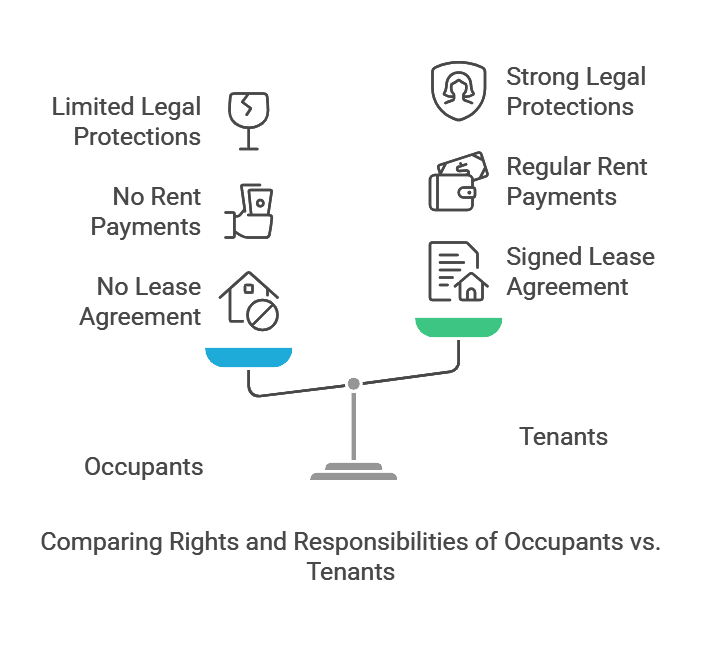
- Signed Lease Agreement: A tenant has a formal lease or rental agreement with the landlord. This legal document outlines their responsibilities, rights, and terms of occupancy.
- Pays Rent: Tenants are responsible for paying rent directly to the landlord as agreed in the lease.
- Legal Rights and Responsibilities: Tenants have a right to a safe, habitable living space and must follow the rules outlined in the lease.
- Protected by Law: In Canada, tenants are protected under provincial landlord-tenant legislation, such as Ontario’s Residential Tenancies Act (RTA).
Lease Terms Matter
According to the Ontario Standard Lease Agreement (see Government of Ontario Lease Form), many leases contain additional terms stating that any person residing in the unit on a permanent basis must be added to the lease.
This means that if an occupant stays long-term or becomes a de facto resident, they may be considered a tenant and must be formally included in the lease agreement. This helps ensure both clarity and legal protection for all parties.
Types of Tenants

There are different types of tenants depending on the rental arrangement:
- Residential Tenant: Someone renting a home, apartment, or condo for personal use.
- Commercial Tenant: A business renting office space, a storefront, or a warehouse.
- Short-Term Tenant: Individuals renting properties for short stays, such as Airbnb guests or month-to-month renters.
- Subtenant: Someone renting from another tenant (e.g., in a sublease arrangement).
Legal Rights of Tenants in Canada
Tenants enjoy legal protections like:
– The right to a habitable and safe living space.
– The right to privacy (landlords must provide notice before entering).
– The ability to dispute unfair rent increases or lease violations through provincial landlord-tenant boards.
What Is an Occupant? (Definition and Key Differences)
On the other hand, an occupant resides in a rental property but does not have a lease or any legal agreement with the landlord. Occupants are typically guests, family members, or roommates who stay long-term but are not listed on the lease.
Key Characteristics of an Occupant
- No Lease Agreement: Occupants do not sign a rental agreement or have any direct legal relationship with the landlord.
- No Rent Payments: Occupants usually do not pay rent directly to the landlord; instead, they might pay the tenant or contribute informally to household expenses.
- Limited Legal Protections: Unlike tenants, occupants have minimal legal rights and can be asked to leave at any time by the tenant or landlord.
Examples of Occupants
– A partner or spouse living with the tenant but not on the lease.
– A family member residing in the rental property.
– A friend or guest staying for an extended period.
Legal Implications of Being an Occupant
Occupants can face several risks, such as eviction without notice if the landlord doesn’t approve their stay. For landlords, unauthorized occupants may violate the lease agreement, causing potential legal and financial headaches.
Permanent Occupants Must Be Declared
As per the Ontario Standard Lease and best practices in property management, if an occupant is living in the unit permanently (e.g., over a few months), the landlord must be informed, and the occupant may need to be formally added to the lease. This ensures they are recognized as a tenant and bound by the lease terms. Failing to disclose permanent occupants can result in a breach of lease conditions.
Tenant vs. Occupant: The Key Differences Explained
Let’s look at the differences between tenants and occupants.
| FEATURE | TENANT | OCCUPANT |
| Has a lease/agreement | ✅ Yes | ❌ No |
| Pays rent to the landlord | ✅ Yes | ❌ No |
| Legal responsibility for rent | ✅ Yes | ❌ No |
| Protected by landlord-tenant laws | ✅ Yes | ❌ Limited |
| Can be evicted by landlord | ✅ Yes (via legal process) | ✅ Yes (simpler process) |
This Distinction Matters Because
1. Lease Compliance: Landlords may prohibit unauthorized occupants, which can lead to legal liabilities or breach the lease terms.
2. Unauthorized Occupancy: Tenants allowing occupants without landlord approval can face eviction or penalties.
3. Legal Responsibilities: Only tenants are legally responsible for rent and property maintenance.
Common Scenarios and FAQs
Scenario 1: “I live with my partner, but only my name is on the lease. Is my partner a tenant or an occupant?”
Your partner is an occupant unless they’ve signed the lease or rental agreement. This means they have limited legal rights and protections.
Scenario 2: “My cousin stays at my place every weekend. Is he an occupant?”
Yes, your cousin is considered an occupant, but since their stay is casual and short-term, they likely won’t cause legal issues.
Scenario 3: “I rented an apartment with a friend, but they moved out and let someone else stay. Is the new person a tenant?”
No, the new person is an occupant unless they sign a new lease with the landlord. Allowing this without permission could violate your lease terms.
Scenario 4: “Emma has been an occupant, she becomes a tenant. How is it possible?”
Yes, an occupant can become a tenant by signing the lease with the landlord’s approval. This formalizes their role and legal responsibilities.
Scenario 5: “My roommate’s partner moved in permanently. Should we inform the landlord?”
Yes. Most Ontario lease agreements require tenants to disclose any long-term or permanent residents. The landlord may ask the new occupant to sign the lease, making them an official tenant.
Legal Considerations and Best Practices
For Tenants
- Choose a property management company wisely.
- Always clarify in your lease whether long-term occupants are allowed.
- Obtain written landlord approval before allowing someone to move in.
- Ensure your lease protects you from unauthorized occupant issues.
For Occupants
- Be aware of your limited protections. You could be asked to leave anytime.
- If staying long-term, request to be added to the lease for security.
For Landlords
- Clearly define tenant vs. occupant rules in your lease agreements.
- Regularly inspect your property to ensure no unauthorized occupants are staying.
- Use proper screening processes to approve new tenants.
Final Thoughts: Why Understanding Tenant vs. Occupant Matters

Knowing the key differences between a tenant and an occupant is essential for avoiding legal disputes and ensuring smooth rental arrangements. Tenants have legal protections and responsibilities, while occupants have limited rights and require landlord approval for long-term stays. By clearly defining these roles in lease agreements, landlords and renters can prevent misunderstandings and maintain compliance.
Call to Action: Get Expert Help Today!
Still unsure about your situation? Whether you’re a landlord navigating lease compliance or a renter with questions, Dream Property Management is here to help. Contact us today to draft airtight leases, protect your rental investments, and avoid costly mistakes.
Let’s make renting stress-free for everyone! 🏡
For more tips, subscribe to our blog and explore our comprehensive resources, including:
What Is the Rental Income Tax Rate in Canada?
Living Trust in Canada Vs Will: What’s the Difference?


